




Jayapura, Jubi – Indigenous communities in Central Papua province will have the opportunity to manage natural resource potential in their territories through the People’s Mining Permit (Izin Pertambangan Rakyat/IPR).
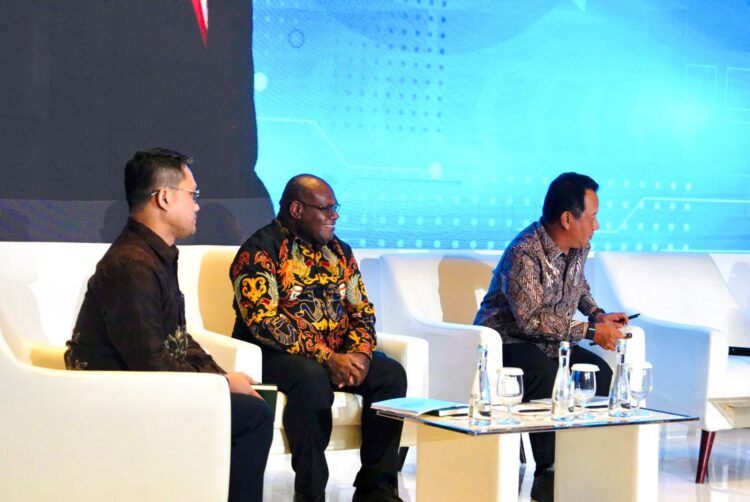
The policy was outlined by Central Papua Governor Meki Nawipa in a written statement on Tuesday (May 5, 2026), highlighting opportunities for Indigenous communities to manage mineral resources such as gold.
Nawipa said that after the government completes its crackdown on illegal mining activities in the province, the next step will be to regulate community-based mining in line with the division of authority between provincial and central governments.
“People’s mining is governed by regulations. We will organize it in accordance with those rules. For now, our focus is to first bring all illegal mining activities under control,” Nawipa said.
He added that the provincial government will then formulate a framework for how community mining will be implemented in Central Papua.
One approach under consideration is granting IPR permits through cooperatives or micro, small, and medium enterprises (MSMEs) managed by Indigenous landowners in areas with mining potential.
“We will grant IPR to communities that are the rightful customary landowners and have cooperatives or MSMEs, so they can benefit directly from their natural resources. That is what we intend to do,” he said.
BERITATERKAIT
For the purchase, processing, and downstream management of mining products, the Central Papua provincial government plans to collaborate with Mining Industry Indonesia (MIND ID), a state-owned mining holding company.
Nawipa noted that MIND ID oversees several major mining companies in Indonesia, including Freeport Indonesia, Aneka Tambang Tbk, Bukit Asam Tbk, Indonesia Asahan Aluminium (INALUM), Timah Tbk, and Vale Indonesia Tbk.
He said the collaboration aims to strengthen the contribution of the mining sector to national and regional economic growth, while improving the welfare of Indigenous communities.
Nawipa emphasized that the policy would be implemented carefully and in stages, taking into account multiple aspects, including environmental sustainability, security, revenue generation, and community welfare.
“All considerations must be carefully weighed—environmental, security, revenue, and community welfare aspects—so that the benefits can be shared broadly,” he said. (*)

















Discussion about this post