




Jayapura, Jubi – The Papuan Food Festival 2026 has been hailed as an important milestone in strengthening food security based on local wisdom while promoting the preservation of Papua’s forests.
The Sorong City Government, together with the Sago Granary Collective (Kolektif Lumbung Sagu) and the Belantara Papua Foundation, officially opened the festival at Belantara Papua in Sorong City, Southwest Papua, on Tuesday.
The opening ceremony was officiated by Sorong Deputy Mayor for Economic and Development Affairs, Tamrin Tajuddin.
“You may have straight hair, but keep your heart rooted in Papua,” Tajuddin said in his remarks, according to a written statement received by Jubi on Wednesday.
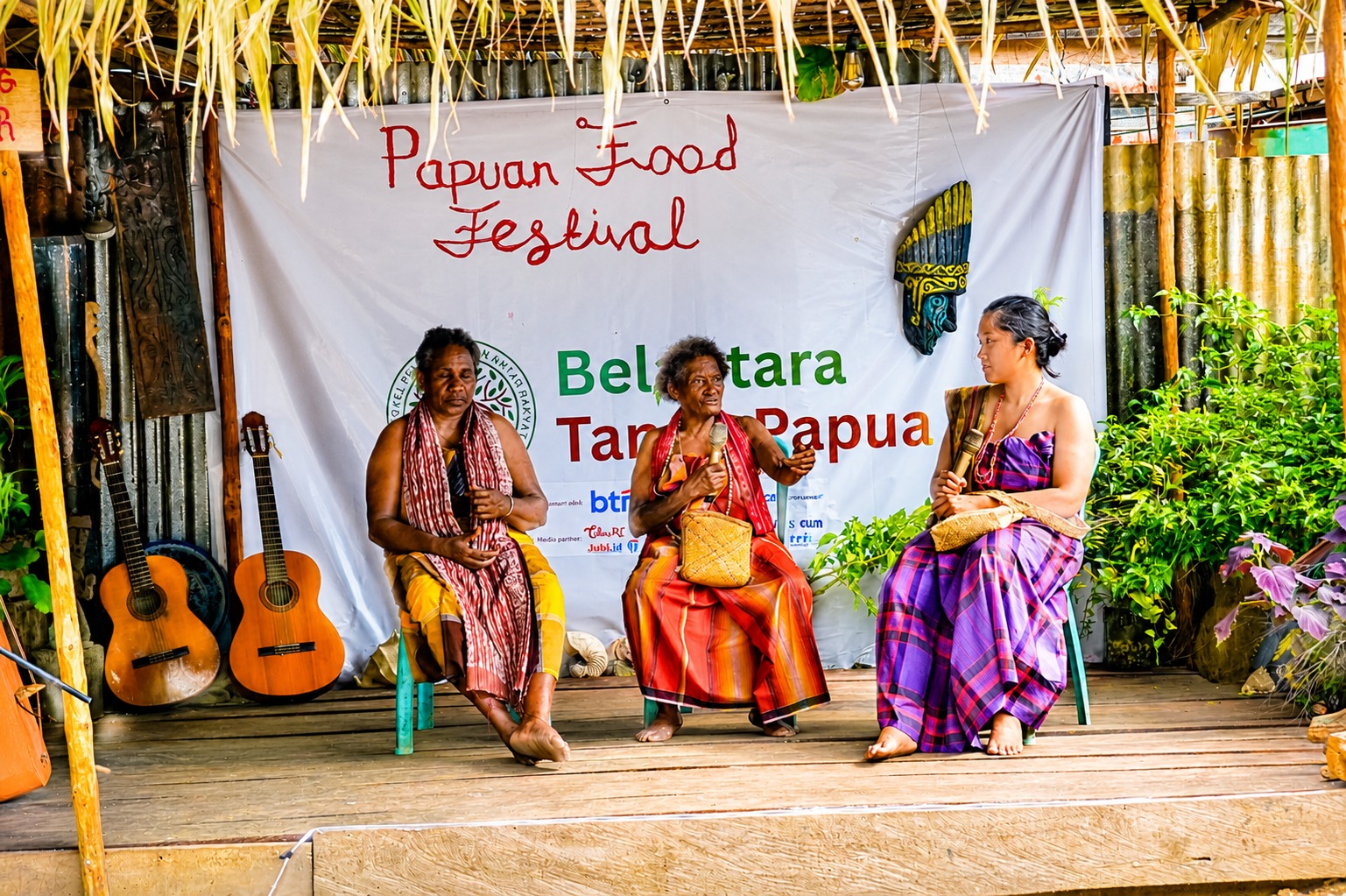
The event opened with a captivating contemporary Papuan dance performance, followed by music and songs presented by Belantara Papua, as well as a solemn rendition of the traditional Kain Kla chant by Mama Thea Gifelem.
The distinctive voices of Papuan women echoed through the venue as a symbol of respect for ancestors and nature.
Papuan Food Festival Committee Chair Salsabila Andriana, who also manages the Sago Granary Collective, said the festival was born out of concern over the gradual erosion of traditional food knowledge amid the growing dominance of industrialized food systems.
“This festival aims to reintroduce and revive collective memory, while reminding us that by keeping local food traditions alive and protecting our forests, we are creating a sustainable future together,” Andriana said.
Markus Wafom, Director of the Belantara Papua Foundation, explained the role his organization plays within the community.
“This place serves as a center for mentoring Papuan children who have dropped out of school and would otherwise spend their time on the streets. Here, they are trained to become independent, choose a quieter path in life, and preserve their cultural heritage,” Wafom said.
For him, the festival reflects years of quiet grassroots work carried out alongside local communities.
The highlight of the event was a talk show moderated by Andriana, featuring two Indigenous Moi women who have become key figures in food security and conservation efforts.
They were Oyang Hana Mili, a custodian of the Waili tradition—a Moi practice of gathering, foraging, and cooking together—and Mama Batseba Mobilala, leader of the Yuluk Malagufuk women’s group from Malagufuk Tourism Village, renowned for its bird-of-paradise ecotourism.
For decades, Hana Mili has traveled throughout Papua assisting women’s groups in various regions, following in the footsteps of missionary sisters. She now focuses on gardening and preserving traditional food practices such as Waili and Menoken, a traditional method of processing sago.
“For Papuans, there are three things that should never be left behind: a machete, a lighter, and sago. One for cutting, one for making fire, and one for food,” Hana Mili said.
She emphasized that these three items are more than simple tools; they symbolize the independence and dignity of the Papuan people.
Mama Batseba Mobilala explained that as a community coordinator, she personally manages bookkeeping, organizes cooking schedules among members, and records all revenue generated from international tourists who visit her village each week.
She said she keeps detailed records of who cooks on which day, how much income is earned, and how the earnings are distributed equally among the women involved.
“By doing this, all the women trust the system and remain motivated,” she said.
Mobilala added that protecting forests is not only important for the environment but also for family livelihoods.
According to her, international tourists continue to visit because their forests remain intact and birds-of-paradise still thrive there—a reality made possible by the community’s conservation efforts.
“If this forest disappears, how will we survive? How will our children and grandchildren find food in the future?” Mobilala said.
Both Indigenous women delivered a strong message to Papua’s younger generation: protect the forests and preserve cultural traditions, because both are the very breath of life.
Following the talk show session, guests were invited to visit an exhibition titled “Oyang Hana: Maestra of Waili,” which offered an in-depth exploration of the Moi people’s traditional food knowledge.
The exhibition featured Oyang Hana’s life story, the philosophy behind the Waili foraging tradition, traditional cooking techniques, and the rituals associated with Waili communal picnics. Various traditional foods were also displayed, showcasing the richness of local Papuan gastronomy.
Two major installations served as the exhibition’s focal points. The first, the Food Granary Installation, displayed local staples such as sago, taro, sweet potatoes, cassava, and noken bags filled with root crops, symbolizing the food self-sufficiency of Papuan communities.
The second, the Interactive Forest Installation, featured a series of tree structures representing forests that have been logged and degraded.
Visitors were invited to write their hopes for Papua’s forests and local food traditions on pieces of paper, which were then hung throughout the installation.
The exhibition space was also inaugurated as a memorial to the late Max Binur, a founding figure of Belantara Papua whose work inspired culture-based conservation initiatives across the region.
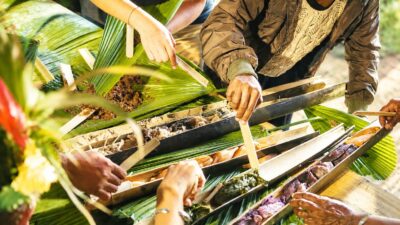
The event concluded with a traditional bamboo-cooking demonstration led by Mama Batseba, Mama Thea, and Oyang Hana.
A variety of dishes were prepared during the demonstration, including snakehead fish cooked in bamboo, grilled ikan sembilan cooked in bamboo, ige or kawes—a traditional Papuan preparation of ikan sembilan—along with bamboo-roasted gedi leaves, sweet potatoes, and cassava.
Participants enjoyed the dishes while engaging in informal conversations with the women cooks, asking about ancestral recipes and the cultural philosophies behind each preparation.
The warm and relaxed atmosphere marked the conclusion of a meaningful opening celebration. The Papuan Food Festival will continue through Saturday, June 20, 2026.
Organizers hope the festival will become more than a ceremonial event and instead evolve into a sustained movement to restore the dignity and recognition of Papua’s local food traditions on the global stage.
The Papuan Food Festival is an annual initiative organized by the Sago Granary Collective and the Belantara Papua Foundation. It aims to promote local food wisdom, support traditional farmers and food processors, and advocate for forest conservation as a vital source of life for the people of Papua. (*)













Discussion about this post