





Jayapura, Jubi – One morning, a boy named Yance Asaribab from Kotaraja was bathing along the shores of Youtefa Bay when he drank from an old well believed to date back to the Japanese occupation. Built using a metal drum, the structure remains intact despite its rusted, brown exterior.
“The water isn’t salty, it’s fresh,” Asaribab said in Jayapura, Saturday (12/4/2026).
Residents of Injros Village say the well is a remnant of the Japanese military presence during World War II. According to local resident Philipus Sanyi, the well was once widely used by earlier generations.
“In the past, people used to collect water from this well. Now they don’t, but when we go out to sea, we still stop by to take water,” he said.
*****************
Jubi.id adalah media yang berbasis di Tanah Papua. Media ini didirikan dengan sumberdana masyarakat melalui donasi dan crowd funding. Dukung kami melalui donasi anda agar kami bisa tetap melayani kepentingan publik.
*****************
The well stands as a historical marker of wartime activity in the area. It was built to supply fresh water to Japanese troops stationed nearby. Not far from the site lies a Japanese cave on Mount Mher, believed to have functioned as a defensive bunker.
“There’s a Japanese cave up on Mount Mher,” Sanyi added.
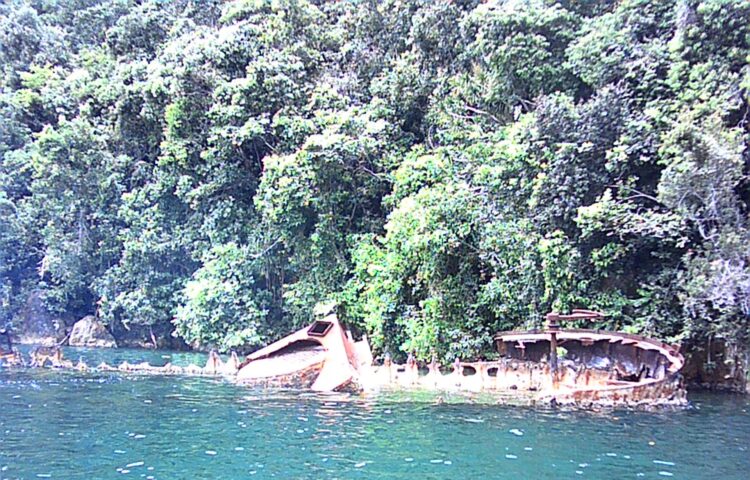
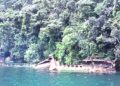
Located on the western side of Youtefa Bay, across from Injros Village, Mount Mher is also home to the remains of a Japanese shipwreck dating back to the war. Over time, the vessel has deteriorated significantly due to seawater exposure.
“The ship is still there, but it’s heavily rusted and slowly disappearing—not because people are taking the metal,” he said with a laugh.


The Balai Pelestarian Kebudayaan Wilayah XXII Papua has identified at least nine underwater archaeological sites in Jayapura linked to World War II. These include wreckage of landing crafts, fighter aircraft remains, armored vehicles, and submerged tanks in the waters of Jayapura. Additional sites—such as landing crafts and tanks—have also been recorded along Hamadi Beach and within Youtefa Bay.
Japanese forces first arrived in what was then known as Hollandia (now Jayapura) on April 19, 1942, landing in Youtefa Bay and Imbi Bay. They later established military bases in Abepantai and constructed an airfield—now Sentani Airport—to support their operations.
Not long after, the Japanese headquarters in Abepantai was razed during the Battle of Hollandia, part of the Allied operation codenamed Operation Reckless. In his book The Liberation of Philippines Luzon Mindanao, the Visayas 1944–1945, Samuel Eliot Morison describes the campaign as one of the largest amphibious assaults carried out by Allied forces during World War II. The operation took place between April 22 and June 6, 1944, in what was then Dutch New Guinea, aiming to pave the way toward Leyte Gulf in the Philippines.
It is therefore unsurprising that remnants of clashes between Japanese and American forces can still be found today. One of the most prominent memorials is located at Hamadi Beach, known as Invasie Strand Hamadi, commemorating the landing of Allied troops led by Douglas MacArthur in Hollandia on April 19, 1944.
A Living Legacy

Beyond relics of war, another unusual legacy remains on Mount Mher: a population of long-tailed macaques (Macaca fascicularis), still thriving today. These monkeys have spread to nearby hills, including areas around a vihara in Skyline, Jayapura.
Community leader Frans Itaar explained that the monkeys were originally brought by Japanese troops during the war, reportedly used as mascots or believed to ward off misfortune. Since then, their population has grown steadily. Notably, there have been no major complaints from residents about their presence.
A vegetable farmer near Jalan Baru, close to the Youtefa Market route, said the monkeys occasionally descend during the rainy season in search of food.
“They really like bananas and cassava,” he said. (*)
Iklan Layanan Masyarakat ini Dipersembahkan oleh PT. Media Jubi Papua







Discussion about this post