





Sentani, Jubi — Jayapura Regency has recorded the second-highest number of malaria cases in Indonesia after Mimika Regency, according to local authorities.
Jayapura Deputy Regent Haris Richard Yocku said there were 71,542 malaria cases recorded in Jayapura Regency in 2025, accounting for approximately 10.1 percent of the total malaria cases nationwide.
The figure places Jayapura Regency as the region with the second-highest malaria burden in the country. The local government acknowledged that malaria control efforts in the regency continue to face serious challenges.
According to Yocku, as of March 2026, malaria screening coverage had only reached 33.62 percent of the first-quarter target.
Meanwhile, the malaria positivity rate remained at 16.33 percent, far above the national elimination standard of below five percent.
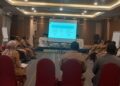
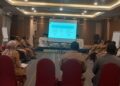
The data was presented by Yocku during the opening of the Training of Trainers (TOT) Participatory Learning and Action (PLA) program for accelerating malaria elimination in Jayapura Regency, held in Sentani on Monday (18 May 2026).
“This shows that malaria transmission is still actively occurring in communities and requires a faster, more massive, and more community-centered response,” Yocku said.
He stated that the regional government is targeting one million malaria tests annually, or around 84,000 tests per month.

Based on that target, approximately 250,125 tests should have been conducted between January and March 2026. However, actual implementation only reached 69,423 tests.
Yocku said the government continues to promote the TOKEN EDAT strategy — Find, Treat, and Control — as a key approach to accelerating malaria elimination. However, he stressed that the effort cannot rely solely on health workers.
“Malaria cannot be solved only by community health centers and healthcare workers. Malaria control requires the active involvement of communities, local volunteers, village leaders, schools, churches, youth, women, and all elements of society,” he said.
Through the PLA training program, participants are encouraged to map mosquito breeding sites, increase malaria testing in high-risk areas, monitor mosquito net use, support patients in completing treatment, and maintain environments free of malaria vectors.
Meanwhile, Lilien Suebu said Jayapura Regency remains the second-largest contributor of malaria cases in Papua after Mimika.
Based on committee reports, malaria cases in 2025 reached 71,545, with an Annual Parasite Incidence (API) of 409.18 per 1,000 residents and a positivity rate of 13.79 percent.
Suebu said the increase in recorded cases over the past two years coincided with massive malaria testing through the TOKEN program. At the same time, the positivity rate has begun to decline.
“Cases have increased because of the massive testing effort, while the positivity rate is showing a decline,” Lilien Suebu said.
She added that accelerating malaria elimination is not only focused on patient treatment, but also on controlling mosquito vectors through cross-sector cooperation and community participation.
The malaria TOT PLA training was attended by 35 participants from various sectors, including the Regional Development Planning Agency (Bappeda), the Community and Village Empowerment Office (DPMK), the military, police, health schools, religious leaders, community leaders, village representatives, and healthcare workers.
The three-day training runs from 18–20 May 2026 with funding support from Asia Pacific Leaders Malaria Alliance and Indonesia’s Ministry of Health. (*)











Discussion about this post