





Jayapura, Jubi – As part of efforts to support the priority programs of Central Papua Governor Meki Nawipa and Deputy Governor Deinas Geley in improving public healthcare services, the Central Papua Health Office conducted an On-the-Job Training (OJT) program in Paniai Regency on Wednesday.
The training focused on the prevention and management of six major communicable diseases: HIV/AIDS, tuberculosis (TB), malaria, leprosy, filariasis, and hepatitis.
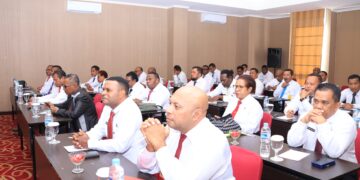
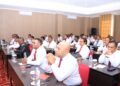
The two-day program brought together dozens of healthcare workers from community health centers (Puskesmas) across various districts in Paniai Regency.
Through the training, health authorities aim to strengthen the capacity of healthcare personnel in the mountainous region, enabling them to deliver services that meet national healthcare standards.
Isak Waine, Head of the Communicable Disease Prevention and Control Section, representing Acting Central Papua Health Office Head Dr. Agus, said the OJT program for HIV/AIDS, tuberculosis, and malaria forms part of broader efforts to strengthen public health services and support the vision and mission of the Central Papua Provincial Government.
He noted that the training also serves to reinforce healthcare systems in remote highland areas, where geographic challenges and limited access often hinder service delivery.
“This OJT program is not only intended to improve the capacity of healthcare workers but also reflects our collective commitment to supporting the governor’s vision of creating a healthy, self-reliant, and prosperous Central Papua,” Waine said.
According to Waine, strengthening HIV/AIDS, tuberculosis, and malaria programs is expected to improve the quality of healthcare services and expand access to quality healthcare for communities at the village and district levels.

He emphasized that the success of public health programs depends on strong collaboration between provincial and regency governments, healthcare workers, and local communities in disease prevention, case detection, treatment, and control.
“This is a strategic step to ensure that healthcare workers in the regions possess knowledge and skills that meet national standards,” he said.
The OJT program for leprosy, filariasis, and hepatitis was held at the Enarotali Community Health Center and attended by program managers and healthcare workers from several health centers across Paniai Regency. The training aimed to enhance human resource capacity in program implementation, disease surveillance, data recording and reporting, as well as efforts to accelerate the elimination of leprosy, filariasis, and hepatitis.
In his remarks, Waine said the OJT program forms part of the Central Papua Health Office’s ongoing technical mentoring and capacity-building efforts for healthcare workers at the regency level.
“This training is designed to strengthen the competencies of healthcare personnel involved in leprosy, filariasis, and hepatitis programs. We hope participants will gain a better understanding of program policies, improve the quality of data recording and reporting, and strengthen surveillance and case-finding activities in their respective service areas,” he said.
He added that strong cooperation among provincial authorities, regency governments, and community health centers is essential to achieving disease elimination and control targets across Central Papua.
Meanwhile, Beni Degei, Head of Disease Prevention and Control at the Paniai Regency Health Office, welcomed the training initiative and its contribution to strengthening the capacity of local program managers.
“We thank the Central Papua Health Office for its continued guidance and technical assistance,” Degei said.
According to him, the training provided healthcare workers with valuable knowledge and practical skills that will help improve service quality, disease control efforts, and program reporting in Paniai Regency.
In addition to classroom sessions, participants took part in discussions, practical exercises on reporting formats, program performance analysis, and reviews of challenges encountered during program implementation in the field.
Through this workplace-based learning approach, participants are expected to apply the knowledge and skills acquired during the training to improve health programs in their respective areas.
The training concluded successfully, with participants showing strong enthusiasm and commitment to supporting efforts to eliminate filariasis, control leprosy, and strengthen hepatitis prevention and control in Paniai Regency and across Central Papua. (*)








Discussion about this post