



Jayapura, Jubi – The Jayapura Regency Environmental Agency (DLH) and the Papua Program of the World Wide Fund for Nature (WWF) Indonesia have invited various community groups to raise awareness about the triple planetary crisis through social media, including the often-overlooked issue of food waste.
The initiative forms part of activities commemorating World Environment Day, observed on June 5, 2026.
WWF Indonesia’s Papua Program stated that the world is currently facing three interconnected environmental challenges, known as the triple planetary crisis: climate change, biodiversity loss and nature degradation, and pollution and waste.
“The term was officially introduced by the United Nations Environment Programme (UNEP) to describe the three major crises threatening the stability of our planet,” WWF Indonesia Program Papua said in a press release on Wednesday.
According to WWF, the impacts of these crises are becoming increasingly evident, ranging from extreme weather events and declining environmental quality to the depletion of natural resources that support human life.
“Every day we are surrounded by environmental issues, such as the never-ending problem of plastic waste, the continued decline of protected wildlife populations, and escalating deforestation.”
The organization noted that food waste is another issue that often receives little attention despite its close connection to the triple planetary crisis.
Food waste generates methane, a potent greenhouse gas that contributes to global warming and is approximately 28 times more powerful that carbon dioxide over 100-year period.
WWF emphasized that addressing major environmental challenges does not always require large-scale or complicated actions.
“We can start with simple daily habits, such as taking only the amount of food we need, finishing our meals, and managing food leftovers more responsibly,” the organization stated.
In addition, WWF encouraged people to adopt more sustainable lifestyles by sorting waste, reducing the use of single-use plastics, and conserving energy.
The organization also highlighted the importance of spreading positive environmental messages through social media as a form of public education, particularly on issues such as food waste.
Building on this theme, the Jayapura Regency Environmental Agency and WWF Indonesia Program Papua, during the 2026 World Environment Day celebrations, brought together interfaith communities, environmental groups, Indigenous communities, university students, and Adiwiyata schools for a workshop on converting food waste into compost and training on creating community-based social media campaign content.
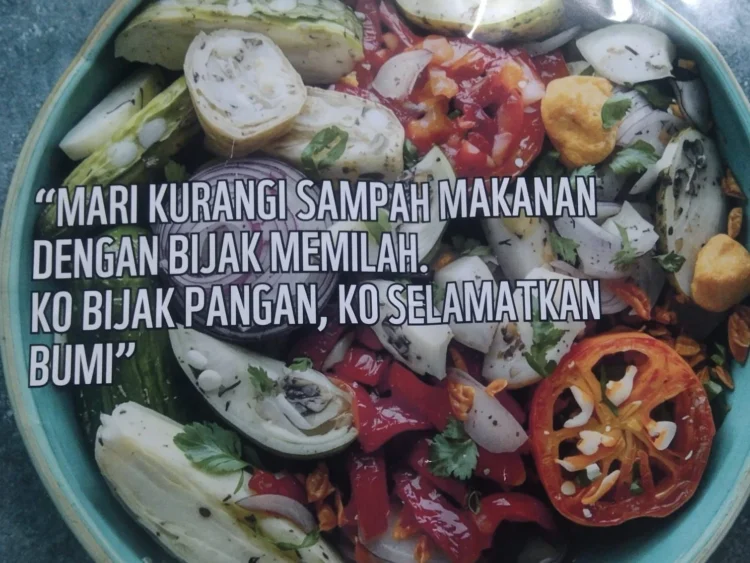
Held at the Holey Narey Learning Centre of WWF Indonesia Program Papua, the event carried the theme “Ko Bijak Pangan, Ko Selamatkan Bumi” (“Be Wise with Food, Save the Earth”). The program served as a follow-up to a series of environmental education activities launched on Earth Day, April 24, 2026.
The event began with presentations on waste and environmental management, including composting techniques. It continued with training sessions on developing social media campaign content as part of the ongoing educational series.
“This activity provides a collaborative space for communities to build awareness that composting food waste and sharing educational content on social media are concrete steps in addressing the triple planetary crisis,” organizers said.
The discussions were enriched by the participation of community organizations, Indigenous representatives, students, and Adiwiyata school delegates.
Yulius Hindom, representing the PAM GKI Onomi Felavauw interfaith community, emphasized that environmental stewardship is a shared responsibility that must begin with everyday habits.
“Religion teaches us to live in harmony with nature. Therefore, education about simple practices such as processing food waste is very important and should be widely shared,” Hindom said.
He added that the training had renewed enthusiasm within his community.
“Our church already has a composter facility, but it has not been active for a long time. I believe this training will help revive the spirit of collaboration in managing waste within the church community,” he said.
A similar message was conveyed by Adelia Tania, Campaign Officer for WWF Indonesia Program Papua.
She believes environmental protection cannot be achieved through individual efforts alone and must be amplified through collective action.
“When a community shares success stories and best practices from its local experiences, the message becomes more relatable and easier for people to embrace. Amplifying positive environmental messages through social media is one tangible way of showing our care for the planet,” Tania said.
Beyond awareness campaigns, she also views community composting initiatives as a practical solution that enables communities to independently address waste management challenges, particularly food waste.
Through the training, participants were expected not only to gain a deeper understanding of the link between food waste and the triple planetary crisis but to also become digital advocates within their communities.
Utilizing social media platforms, organizers said, is one concrete way for individuals to play an active role and demonstrate their commitment to protecting the environment and preserving the Earth for future generations. (*)








Discussion about this post